Does Protein Timing Matter? The Anabolic Window, Honestly
The short answer: total daily protein matters most, the post-workout window is wide, and even meal distribution offers modest gains. Here is the honest breakdown.
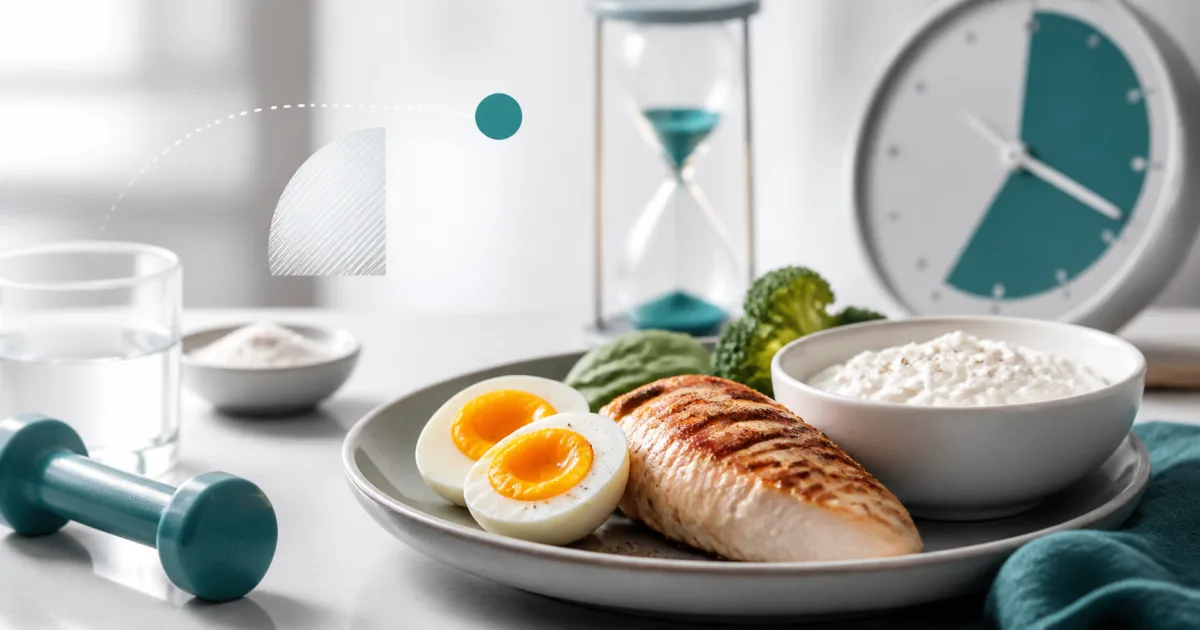
Does protein timing matter? A little, but far less than the supplement industry implies. The overwhelming driver of muscle growth is your total daily protein intake. Once that is met, when you eat it — and how you split it across the day — produces only modest, marginal effects. The famous 30-minute 'anabolic window' is real in the sense that muscles are more receptive to protein around training, but that window is measured in hours, not minutes.
Total daily protein comes first
Every serious review of the topic lands on the same hierarchy: total protein first, distribution second, precise timing a distant third. For most people training for muscle or strength, aim for roughly 1.6 to 2.2 grams of protein per kilogram of body weight per day. Hit that number consistently and you have captured the vast majority of the benefit before timing enters the conversation.
That threshold is a group average, not a hard ceiling. Older adults, people in a calorie deficit, and very lean athletes may benefit from the upper end of the range. But the shape of the evidence is clear: get the daily total right first, then optimise the details.
The anabolic window is wider than marketed
The idea that you must slam a shake within 30 minutes of your last set or 'waste' the workout does not hold up. Muscle protein synthesis stays elevated for roughly 24 hours after a training session, and the period of heightened sensitivity to protein spans several hours around the workout. A pre-workout meal eaten one to two hours before training is still circulating amino acids well into your session and beyond.
This matters practically. If you train fasted first thing in the morning, getting protein reasonably soon afterward is sensible. But if you had a protein-containing meal beforehand, there is no evidence that a few extra hours before your next meal costs you meaningful muscle.
Even distribution: a modest, real edge
Here is where timing earns a small win. Muscle protein synthesis appears to respond best to per-meal doses of roughly 0.4 grams of protein per kilogram of body weight, and spreading intake across about four evenly spaced meals tends to edge out lopsided patterns — for example, a tiny breakfast followed by a huge dinner.
- Target ~0.4 g/kg of protein per meal (about 30-45 g for many adults).
- Aim for roughly four protein feedings across the day.
- Avoid skewing almost all your protein into one giant meal.
- Include a protein source in the meal closest to your workout for convenience.
Be honest about the size of this effect: it is a refinement, not a foundation. If your total is on point and you eat protein across a few meals, you are already capturing nearly all of what distribution has to offer. Obsessing over exact gram counts per sitting yields diminishing returns.
Practical pre- and post-workout tips
You do not need a rigid protocol. A few defensible habits cover most situations:
- 1Eat a protein-containing meal within a couple of hours before or after training — either side is fine.
- 2If you train fasted, prioritise getting protein in reasonably soon afterward.
- 3Whole-food protein and a shake are interchangeable; use whichever you will actually stick to.
- 4Keep the daily total the priority; let timing be the convenient tie-breaker.
The most important variable is one you control every single day: whether you hit your protein target at all. Timing is the polish on top of that, not a substitute for it.
Frequently asked questions
Further reading on Trainera
- Online coaching platform for personal trainersRun your online coaching in one systemin your clients' own language.
- Online coaching platform for personal trainersRun your online coaching in one systemin your clients' own language.
In-depth guides from Trainera, the coaching app that sponsors this site.