Are AI Workout Plans Good? What They Get Right and Wrong
AI can build a technically sound training plan in seconds. Whether that plan is good for you depends on four things AI handles very unevenly.
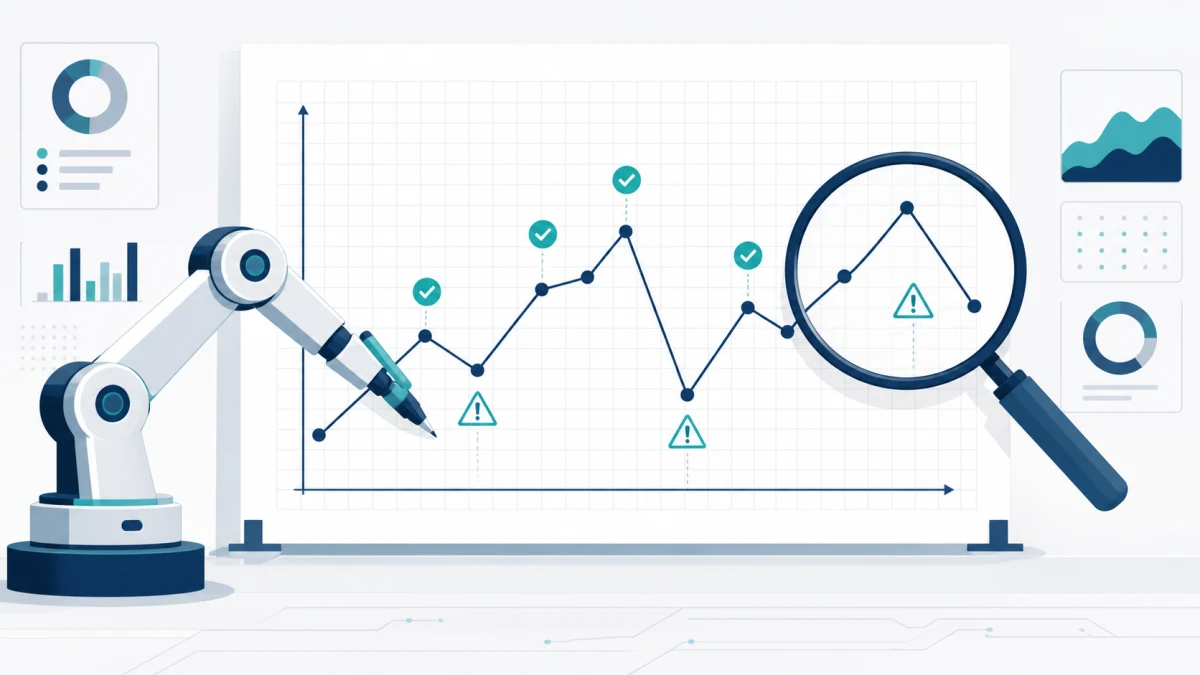
Type your goal into an AI plan generator and you get a full training week back in seconds: exercises, sets, reps, rest times. The speed is impressive. The real question is whether the output is actually good, and the honest answer is: often yes on structure, often no on everything the model cannot see. This article breaks down where AI plans genuinely hold up, where they quietly fail, and how to check one before you commit eight weeks to it.
What makes any workout plan good
Strip away the branding and every effective training plan, human or machine written, rests on four pillars. If a plan nails all four, it works. If it misses even one, results stall no matter who or what wrote it.
- Specificity: the training matches the goal. A strength goal needs heavy compound lifts in low rep ranges, not circuit classes. A fat loss goal needs a calorie deficit plus enough lifting to keep muscle.
- Progression: the plan gets harder over time in a planned way. More weight, more reps, more sets. Without progressive overload the body has no reason to adapt.
- Recovery: hard sessions are spaced so muscles get roughly 48 hours before being hammered again, and total weekly volume stays inside what you can recover from.
- Adherence: the plan fits your real life. Days per week you will actually show up, equipment you actually have, session lengths you can actually sustain.
What AI workout plans get right
Modern AI generators are trained on enormous amounts of programming knowledge, and it shows in the structure of what they produce. Ask for a four-day upper/lower split and you will usually get balanced pushing and pulling, compound lifts before isolation work, and rep ranges that match the stated goal. That is more than most people manage when they build their own routine from random videos.
Structure and balance
The classic self-made plan problem, three pressing movements for every row and a skipped leg day, mostly disappears with AI. Generators distribute volume across muscle groups by default because balanced templates dominate their training data. For a beginner, this alone prevents the most common plateaus and shoulder niggles.
Progression logic
Good AI tools bake in progressive overload: add 2.5 kg when you hit the top of the rep range, or add a rep per week until a deload. Some connected apps go further and adjust the next session based on what you actually logged. A paper plan cannot do that, and honestly most human coaches only adjust at weekly check-ins.
Speed, price and zero judgment
A coach-written program costs anywhere from 50 to several hundred dollars a month and takes days to arrive. An AI plan is instant and free or nearly free. For someone who just needs a sensible starting structure, that tradeoff is genuinely favorable. There is also no intimidation factor: nobody feels judged asking an AI a beginner question at 11pm.
Where AI plans fall short
The failures are less obvious than the wins, which is exactly why they catch people. AI writes a plan for the person you described in a form. It does not train the person you actually are.
Context it cannot see
A generator does not know your gym's squat rack is always taken at 6pm, that your job had you on your feet for ten hours, or that you slept five hours because of a newborn. A human coach folds all of that into the plan without being asked. With AI, you only get context-aware programming if you feed it the context, and most people stop filling in forms after the first screen.
Injuries and technique
This is the biggest genuine risk. AI will happily program barbell back squats for someone with a disc history if that history was never entered, and it cannot watch your deadlift and catch the rounding back before rep five. Video demonstrations help you learn movements, but form correction remains a human strength. If you have a real injury history, an AI plan should be reviewed by a physio or an experienced coach before you run it.
Motivation and accountability
Most people do not quit a program because the sets and reps were wrong. They quit around week three, when novelty fades and life gets busy. An app notification is easier to ignore than a coach who noticed you skipped Tuesday and messages you by name. No AI plan, however well written, solves the adherence problem by itself. This is why hybrid setups, AI programming plus a human who checks in, tend to outlast pure AI plans.
Generic answers to specific plateaus
When progress stalls, AI tends to offer textbook fixes: deload, change rep range, add volume. Sometimes that is right. But diagnosing whether a stalled bench press is a technique issue, a recovery issue or a food issue takes judgment built from watching hundreds of lifters. Generators pattern-match; experienced coaches troubleshoot.
How to sanity-check an AI plan in five minutes
You do not need a coaching certification to spot a bad plan. Run whatever the generator gave you through this checklist before day one.
- Frequency check: each major muscle group is trained at least twice a week, and there are no more than two truly hard sessions back to back.
- Balance check: pulling volume roughly matches pushing volume, and legs get at least a third of total weekly sets. If the plan has 20 sets of chest and 6 of back, regenerate it.
- Progression check: the plan states how it gets harder. If week six looks identical to week one, it is a workout list, not a program.
- Reality check: the days per week, session length and equipment match your actual life. A perfect six-day plan you follow for ten days loses to a decent three-day plan you follow for a year.
- Safety check: nothing on the list aggravates a known injury, and every exercise is one you can perform with reasonable technique or has a listed regression.
One more tip that fixes most weak AI plans: improve the input, not just the output. Tell the generator your exact equipment, your injury history, your realistic days per week and how long you have been training. The difference between a plan built from one sentence and a plan built from a full profile is usually the difference between a generic template and something worth following.
The verdict: good starting point, incomplete solution
So, are AI workout plans good? For structure, progression and price, yes, and clearly better than training with no plan at all or copying a random influencer routine. For injury management, technique and staying accountable past week three, they are still no match for a decent human coach. The smart move is to use AI for what it does well and add human input where it matters: check the plan against the list above, get form feedback from a coach or an experienced training partner, and build accountability into your week on purpose.
Frequently asked questions
Further reading on Trainera
In-depth guides from Trainera, the coaching app that sponsors this site.