Are AI meal plans accurate? Calories, macros and reality
AI can build a meal plan in seconds, but is the math right? Here is where the errors actually come from, how big they are, and how to check a plan yourself.
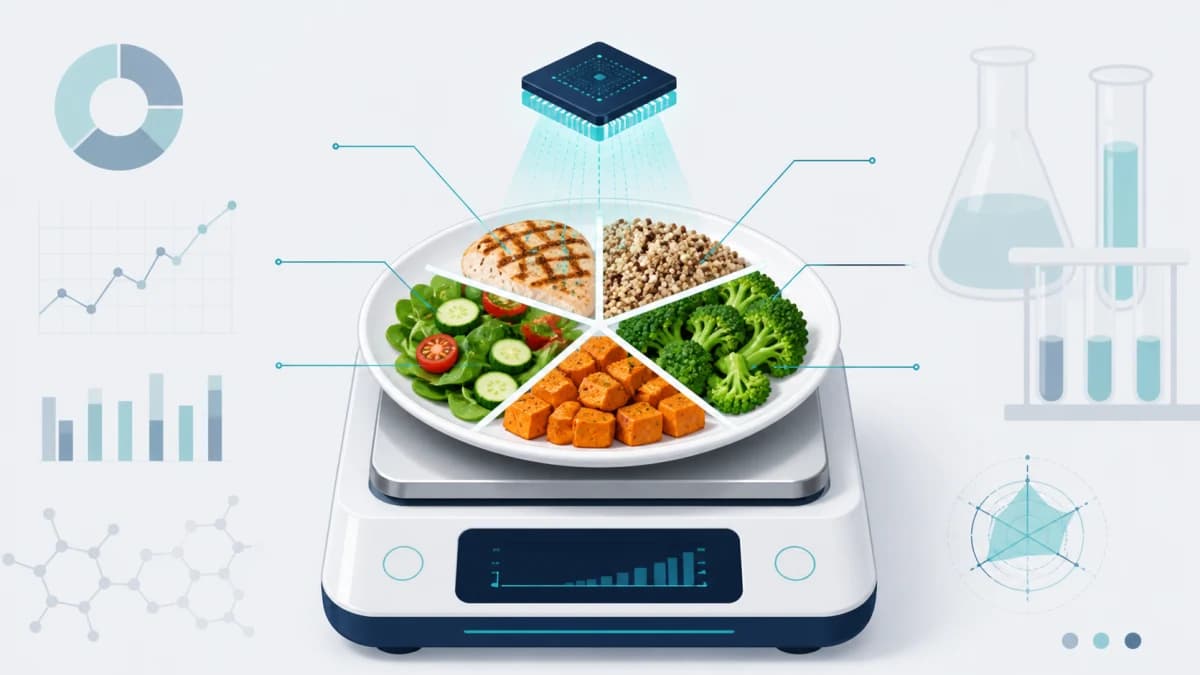
Type your stats into an app and thirty seconds later you have a full week of meals with calories and macros attached. It looks precise. Whether it is accurate is a different question, and the honest answer is: accurate enough for most goals, but with error bars that nobody prints on the screen. This article walks through where those errors come from, how big they really are, and how to check an AI meal plan before you trust it for three months.
How AI meal planning actually works
Under the hood, most AI meal planners do three things. First they estimate your calorie needs, usually with an equation like Mifflin-St Jeor multiplied by an activity factor. Second they split those calories into macros based on your goal, something like 1.6 to 2.2 g of protein per kg of body weight for people who train. Third they fill the plan with foods from a nutrition database, portioned to hit the targets.
Notice that none of these steps is magic. The AI part mostly decides which foods to combine and how to adapt when you swap meals or log something different. The math underneath is the same math a coach would do by hand. That matters, because it means an AI plan inherits every known limitation of that math.
Error layer 1: the calorie target itself
Prediction equations estimate resting metabolism within about 10% for most adults, and the activity multiplier adds more uncertainty on top. If your true maintenance is 2600 kcal, an AI plan built on a 2400 or 2800 kcal estimate is completely normal. That is not an AI flaw. A human coach using the same formula starts from the same guess. The difference is what happens next: a good coach, and a good app, adjusts the target based on how your weight actually trends.
Error layer 2: food database gaps
The calories attached to each meal come from a database, and databases are messier than they look. Generic entries average many products, user-submitted entries can be flat wrong, and branded foods change recipes without updating anywhere. Even the reference point everyone trusts, the nutrition label, has legal wiggle room.
A 500 kcal meal on paper can legally be 600 kcal in reality. Cooked foods add another layer: rice and pasta absorb water, meat loses fat in the pan, and oil used for cooking often never gets logged at all. None of this is unique to AI planners, but AI presents numbers with confident decimal points, which makes people forget the fuzz underneath.
Error layer 3: portions and human logging
The biggest error source is not the algorithm. It is the gap between what the plan says and what lands on your plate. People are famously bad at estimating portions, and the direction of the error is predictable: intake gets underestimated, activity gets overestimated.
That study is an extreme group, but larger surveys consistently find self-reported intake runs 20 to 30% below reality. An AI plan that assumes you ate exactly 150 g of chicken and 80 g of rice is doing math on inputs that are often wrong by a quarter. Weighing food fixes most of this, which is why the plans that work best pair AI targets with at least a few weeks of a food scale.
How accurate is photo-based calorie logging?
Snapping a photo of your plate and letting AI estimate the calories is the fastest logging method there is, and validation studies on image-based dietary assessment generally put the error somewhere around 20 to 30% per meal. The AI has to guess the food, the ingredients you cannot see, the cooking method and the portion depth from a flat image. Oil, butter, sauces and sugar in drinks are the classic misses.
Used well, that error is fine. Individual meals average out over a week, and a photo log you actually keep beats a precise log you abandon after four days. Trainera's AI food photo scanner is a good example of the sensible use case: it logs the meal in seconds so the habit survives, while the calorie number is treated as an estimate that feeds a weekly trend, not gospel. If you want tighter numbers for a cutting phase, weigh the food and use the photo for everything else.
How to verify an AI meal plan yourself
You do not need to trust the app blindly. Ten minutes with free calculators tells you whether the plan's foundations are sane.
- Run your stats through a TDEE calculator. The plan's daily calories should sit within about 10% of your TDEE for maintenance, roughly 500 kcal below it for fat loss, or around 300 kcal above it for a lean gain.
- Check protein with a macro or protein calculator. For active people you want roughly 1.6 to 2.2 g per kg of body weight. A plan giving a 80 kg lifter 90 g of protein failed the test.
- Sanity-check three or four individual meals against a reputable database like USDA FoodData Central. If the plan's numbers are consistently 20%+ off, the database behind it is weak.
- Then let the scale vote. Track your morning weight for two to three weeks. If the trend does not match the goal, adjust intake by 100 to 200 kcal regardless of what any calculator said.
That last step is the real accuracy fix. Every formula, human or AI, is a starting estimate. Your weight trend is the measurement.
When AI is good enough, and when you need a dietitian
For a healthy adult chasing fat loss, maintenance or muscle gain, a verified AI meal plan is genuinely good enough. The error margins above apply equally to a plan a coach writes in a spreadsheet, and the AI version adapts faster when you swap meals or your schedule changes. Where software stops being appropriate is anywhere food intersects with medicine.
- See a registered dietitian for: diabetes, kidney or liver disease, pregnancy, gastrointestinal conditions like IBD or celiac management, a history of eating disorders, or anyone under 18 dieting for weight.
- AI is fine for: standard fat loss and muscle gain goals, macro targets for recreational sport, meal variety and structure, and keeping a food log you will actually stick to.
- The middle ground: significant weight to lose (say 20 kg+) or plateaus that survive honest logging. AI plus a real human coach reviewing your data works well here.
One more honest note: an AI planner cannot see lab work, medication interactions or a complicated relationship with food. A dietitian charges more than an app subscription because that judgment is what you are paying for. If any of the medical conditions above apply to you, the accuracy question is settled before it starts.
Frequently asked questions
Further reading on Trainera
- AI Meal Plan Generator (Free)
- Online coaching platform for personal trainersRun your online coaching in one systemin your clients' own language.
In-depth guides from Trainera, the coaching app that sponsors this site.